
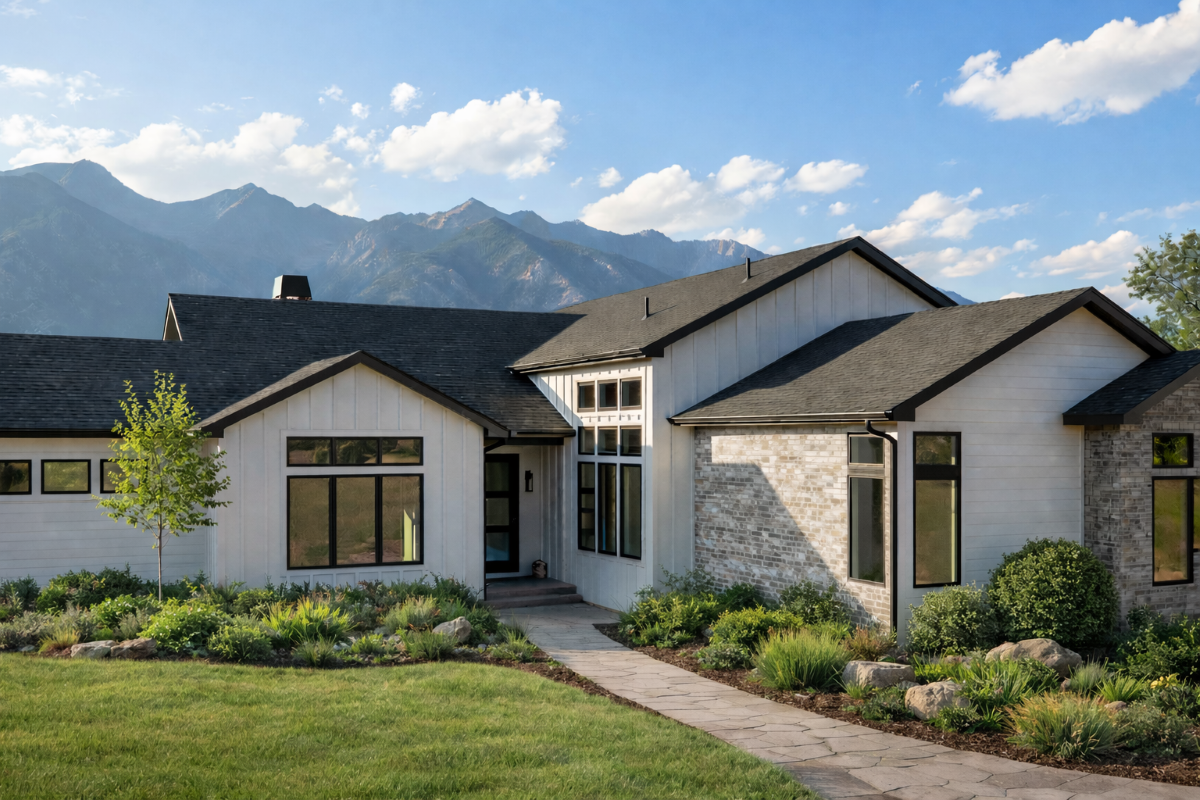
Wildfire Code & Fire-Resistant Exteriors
Colorado’s Wildfire Code Took Effect July 1, 2026. Does It Affect Your Roof or Siding?
If your property sits in a mapped wildland-urban interface zone, a full roof or siding replacement can now trigger structure-hardening requirements. Most homeowners find out at plan review. We’d rather you know before you sign anything.
-
Statewide Wildfire Code, Now in Effect
-
Colorado Wildfire & Building Code Context
-
Full Roof & Siding Replacements in WUI Zones
Get Started Today
"*" indicates required fields


5.0 Rating

5.0 Rating

Colorado’s First Wildfire Building Code
Colorado adopted its first statewide wildfire building code, the Colorado Wildfire Resiliency Code (CWRC). Local jurisdictions had until April 1, 2026 to adopt it and July 1, 2026 to be compliant. Each jurisdiction works from its own adopted version and its own map, and some have chosen standards stricter than the state minimum.
Requirements vary by jurisdiction and are set by your local building department. We verify what applies to your specific address before we write a scope.
Understanding the Wildfire Code

Does It Apply to My Project?
The code covers new construction and significant alterations within mapped WUI areas. The state’s definition of “significant” includes replacing 25% or more of a surface, and projects over 500 square feet. It is not retroactive, so most repairs don’t trigger it, but a full roof or siding replacement usually does.
Requirements vary by jurisdiction and are set by your local building department. We verify what applies to your specific address before we write a scope.

What the Code Asks For
Depending on your property’s fire-intensity classification, the code points toward Class A rated roof assemblies, noncombustible or ignition-resistant exterior wall coverings, ember-resistant venting, and specific deck material requirements. The exact combination scales with the mapped risk for your parcel.
Requirements vary by jurisdiction and are set by your local building department. We verify what applies to your specific address before we write a scope.

Your Jurisdiction Matters
We serve homeowners and property owners across Louisville, Broomfield, Boulder, Evergreen, Conifer, and surrounding Front Range communities. Each city and county maintains its own WUI map and adopted code, and some enforce standards stricter than the state baseline. Two properties a few miles apart can face different requirements.
Requirements vary by jurisdiction and are set by your local building department. We verify what applies to your specific address before we write a scope.

How We Handle It
We check the property’s WUI classification before writing a scope, spec the project to what applies at your address, and handle plan review as part of the process. That way the requirements are built into your project from the start, not discovered halfway through.
Requirements vary by jurisdiction and are set by your local building department. We verify what applies to your specific address before we write a scope.
Does the Code Apply to Your Project?
Two questions decide it:
1. Is your property in a mapped WUI zone?
2. Is your project a full replacement, or over 500 square feet?
If yes to both, structure-hardening requirements likely apply.
Not Sure If You’re In A WUI Zone?
Send us your address and we’ll check it, confirm exactly what applies to your project, and build it into your scope before you sign anything.
Contact Us Today
"*" indicates required fields
5.0 Rating
5.0 Rating
Fire-Resilient Materials We Work With

James Hardie® Fiber Cement Siding
James Hardie publishes that its fiber cement siding is verified noncombustible per ASTM E136 and Class A fire rated per ASTM E84 with a flame spread of 0. Per James Hardie’s published testing, the product meets Class 2 structural hardening requirements for exterior walls in WUI areas with Moderate to High Intensity Fire Risk Classifications, and 1- and 2-hour fire-rated wall assembly designs are available. This makes it a strong candidate for exterior wall coverings in higher-risk zones.

Steel Siding
Steel is a noncombustible cladding material, meaning it will not ignite or contribute fuel to a fire. This makes it well suited to mountain properties and homes in WUI zones, where wind-driven embers are the leading cause of home ignition. Because steel resists both direct flame and radiant heat, it helps limit the ways fire can reach and spread across a home’s exterior.

Asphalt Shingle Roofing
The roof is one of the most vulnerable parts of a home during a wildfire, which is why the assembly rating matters. A Class A rated roof assembly carries the highest fire classification, indicating strong performance against flame spread and ember exposure. That rating depends on the complete assembly, including underlayment and proper installation, not the shingle alone. For most residential and multifamily properties, a Class A rated asphalt assembly is a practical and effective first line of defense.

Metal Roofing
Metal roofing is noncombustible and, installed as part of a Class A rated roof assembly, provides strong resistance to flame and ember intrusion. Its smooth, continuous surface gives embers few places to collect, reducing the risk of ignition on the roof. Metal also withstands radiant heat well and holds up under the temperature extremes common to Colorado’s climate, making it a durable choice for residential and commercial properties.

Synthetic Composite Roofing
Synthetic composite roofing, including F-Wave–type products, can achieve Class A performance as part of a rated roof assembly while replicating the look of slate or wood shake. These systems are engineered to resist ignition and flame spread, and because they’re manufactured to consistent specifications, their performance is predictable across the roof. It’s a strong option for homeowners who want fire resilience without sacrificing appearance.
A Structured Approach to General Contracting

STEP 1:
Inspection and Evaluation
Every project begins with a detailed review of your property. This step helps determine whether full replacement is appropriate and identifies system-level considerations before decisions are made.

STEP 2:
Education and Scope Definition
We provide education around materials, systems, and replacement requirements. The scope is defined clearly so stakeholders understand what the project involves before moving forward.

STEP 3:
Planned Replacement Execution
Once the scope is defined, replacement work is planned and coordinated to support consistency, safety, and predictable execution across the exterior system.

STEP 4:
Completion and System Review
Projects conclude with a review of completed exterior systems to confirm alignment with the defined scope and long-term performance goals.
Reviews
What Local Clients Say About Summit West

The quality of the work exceeded our expectations. They went above and beyond in so many ways, accommodating additional requests and working closely with us throughout the entire process to truly transform the house. The level of detail they delivered was incredible and it feels like a completely new home.
What really stood out was the people. The entire team was not only highly skilled but also incredibly personable and easy to work with. John had excellent communication and checked in with me every day to walk through progress and make sure everything was on track.
I can’t thank John and the team enough. I’m extremely grateful we chose Summit West and would highly recommend them to anyone looking for quality work and a great experience.
Jon Jon Vigil is a man of his word—he walked me through every step and delivered exactly what he promised. Thanks to Summit West Contracting for the outstanding service and craftsmanship. Highly recommended.

Considering New Siding?
Fire resilience is best addressed during a full siding replacement. We install noncombustible and ignition-resistant options suited to Colorado’s wildfire zones. Visit our Siding page for material choices and full-scope replacement details.

Fire-Resilient Building in Colorado
As of mid-2026, Colorado enforces a statewide wildfire construction standard for homes in designated Wildland-Urban Interface zones. What it requires depends on: where your property sits, the state maps land by fire intensity, and stricter zones call for stricter materials. It applies to new builds and full-scope replacements, not to existing homes or minor repairs, and some jurisdictions go beyond the state baseline.
The materials the code points toward (Class A rated roof assemblies, noncombustible or ignition-resistant siding, ember-resistant vents) are worth considering on any exterior project in fire country, code or not. Before we scope your project, we confirm your parcel’s fire-intensity classification and your jurisdiction’s adopted requirements, then plan around them.

Check Your Neighborhood’s Wildfire Risk
Want a general sense of wildfire risk in your neighborhood? The Colorado State Forest Service publishes a Live Wildfire Ready map you can search by address. It’s an educational tool for neighborhood-level risk, not the regulatory map your building department uses. For code questions on a specific property, send us the address and we’ll check the applicable requirements.
Built for Colorado Communities
Summit West operates with a clear focus on Denver-area properties and the communities across Colorado’s Front Range. From residential neighborhoods to multifamily and commercial buildings, our work is rooted in understanding local conditions and supporting long-term exterior performance where we live and build.
- Denver, CO
- Lakewood, CO
- Arvada, CO
- Littleton, CO
- Golden, CO
- Centennial, CO
- Highlands Ranch, CO
- Evergreen, CO
- Fort Collins, CO
- Conifer, CO
- Parker, CO
- Boulder, CO
- Louisville, CO
- Broomfield, CO
- Westminster, CO


